Behind the Scene of 360° Sublimation
Every finished ATIU bottle is the end point of a sequence you could walk in ten minutes on the floor of either of our two plants in Verona. Pallets of undecorated glass arrive at one end of the building; inspected, packed, decoration-complete bottles leave at the other, and everything in between — the priming line, the digital printers, the sublimation cells — runs in a single continuous flow. This article follows that path the way a visiting brand team would, from the first conversation through to the pallets leaving for the filling line, because seeing the sequence is the fastest way to understand why the process behaves so predictably at industrial scale. If you want the technology itself explained first, our overview of what sublimation on packaging actually is covers the chemistry; what follows is the physical reality of it, station by station.
Consultation
Long before any glass reaches Verona, the project starts as a conversation. You tell us about the product, the occasion, the brand values, the quantities and the launch idea, and together we evaluate design intent alongside technical constraints — glass geometry, surface finish, end-use conditions, filling compatibility. This is also where volumes take shape — ATIU projects run from 5,000 units up to millions per project — because scale shapes everything from primer selection to scheduling. We define a timeline based on current production availability, and because every brief is different, we make no assumptions and send no generic proposals: what leaves this stage is a shared technical picture of the bottle you want to launch.
Discovery Set
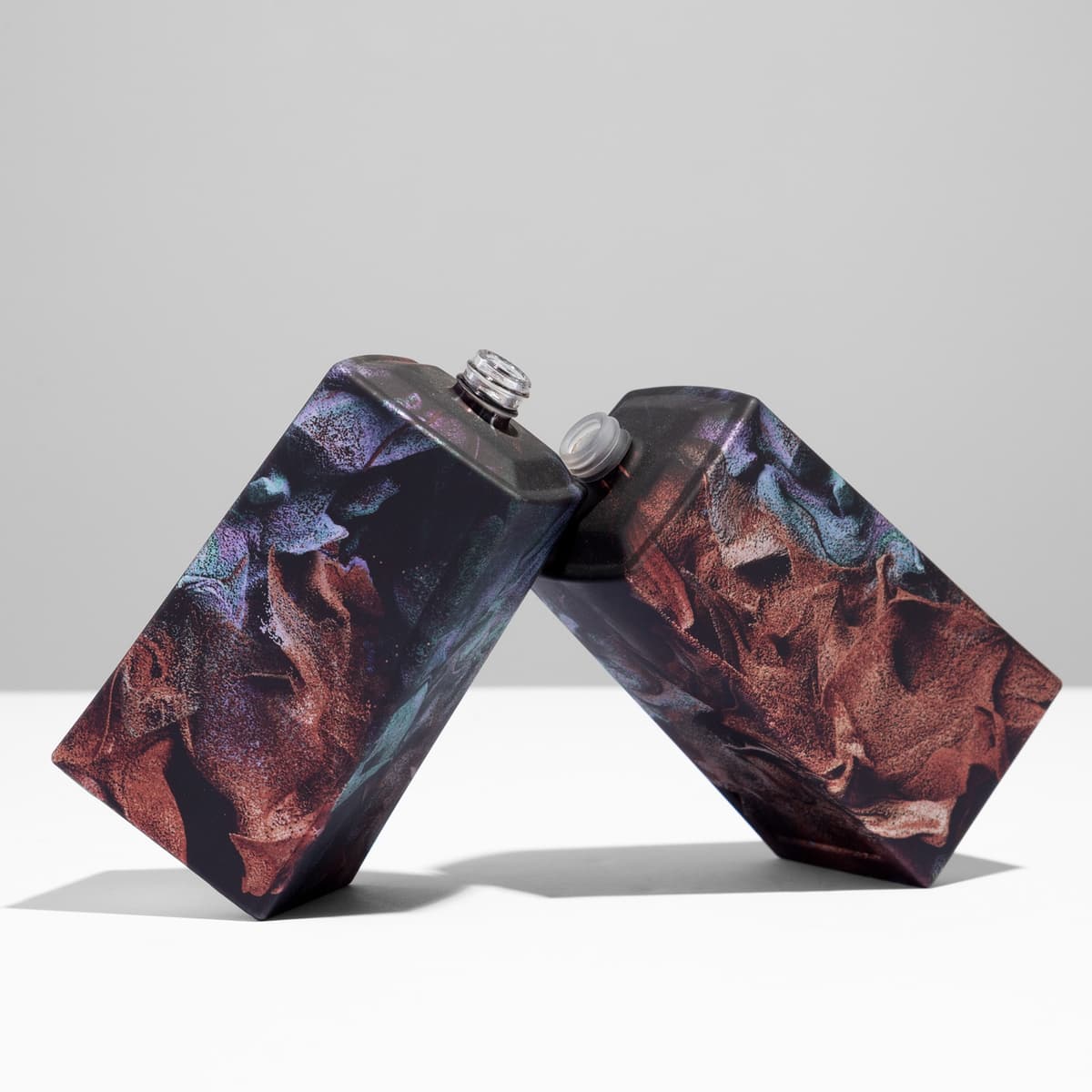
Next comes the part of the process brands tend to remember: the discovery set, a curated series of physical samples decorated on real glass. Different primers, different coverage levels, different effects — the goal is to see and hold the options before committing to one. In this phase we can also mix different artworks on the same primer to explore visual directions side by side, which is often where a design team discovers that the direction they arrived with is not the one they leave with. This is where the project stops being a rendering and starts being an object.
Refinement and the Production-Line Sample
With one primer and one artwork selected, we refine the details — seam alignment, colour accuracy, text legibility at actual scale — and lock the technical parameters: coverage zones, registration tolerances and the curing profile. The decisive step here is the production-line sample, which ATIU delivers in five working days: it is made on the same line, with the same primer, the same inks and the same curing profile as the eventual run, which means the sample you approve and the bottles you receive months later are the same object, not a lab prototype and its industrial translation. Once you sign off, everything after this point is production-ready, and the approved sample becomes the physical reference that every bottle in the run will be inspected against.
On the Line: Glass Arrival and Priming
Now the plant takes over. The first thing you notice on the floor is that the glass arriving in Verona is the brand's own — sourced from the glassmaker of your choice and delivered to us as a standard, undecorated input, because ATIU decorates bottles rather than making them. From the pallet, each bottle moves to the priming line, where it receives one of eight waterborne primer finishes: this thin functional layer is what the sublimation inks will later fuse into, and it is also what defines the finished character of the bottle, from a clear finish that keeps the glass visible to a metallic soft-touch matte that changes how the bottle feels in the hand. Primed bottles are cured and staged for printing — at this point the line already looks like the finished product, minus its artwork.
On the Line: The Sublimation Cells
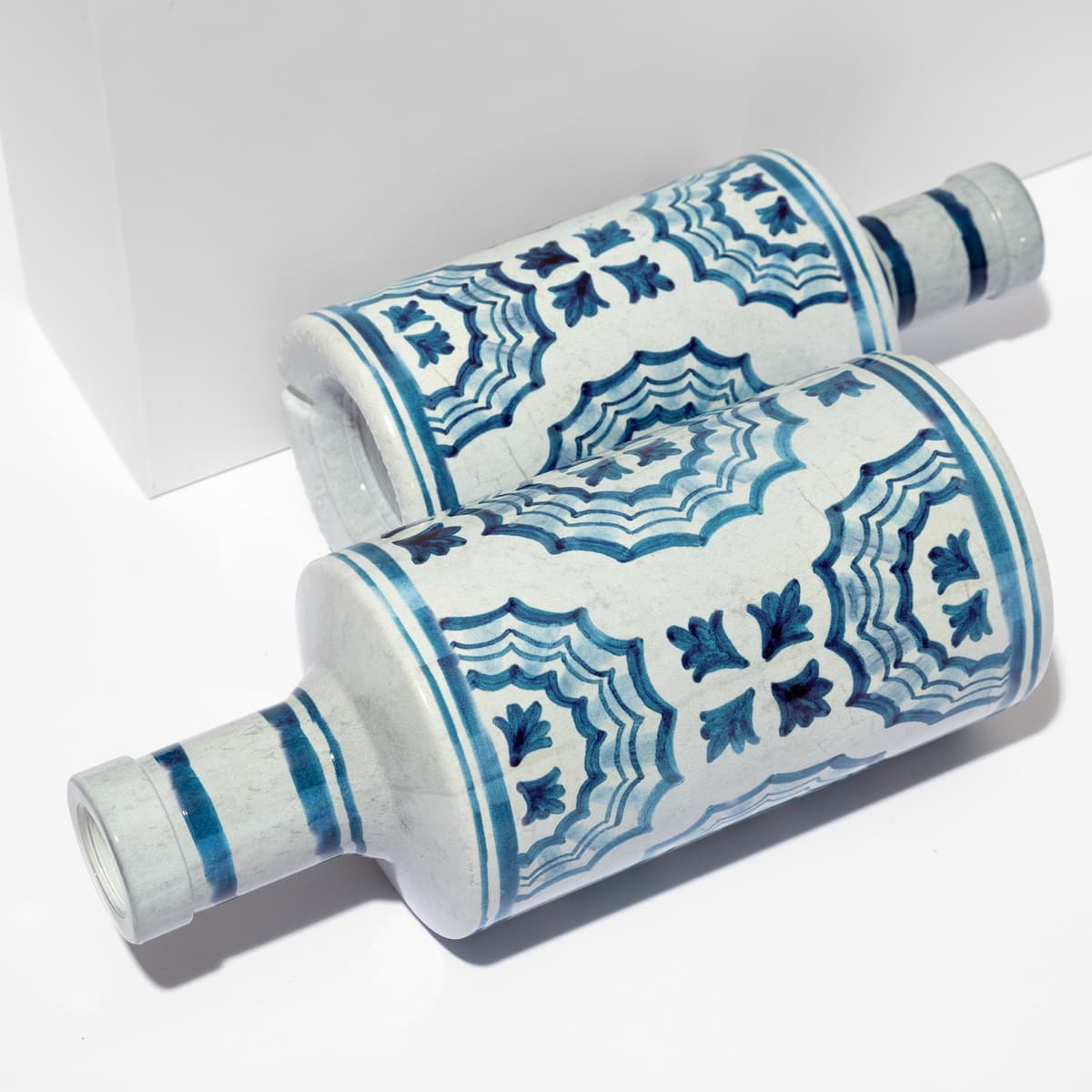
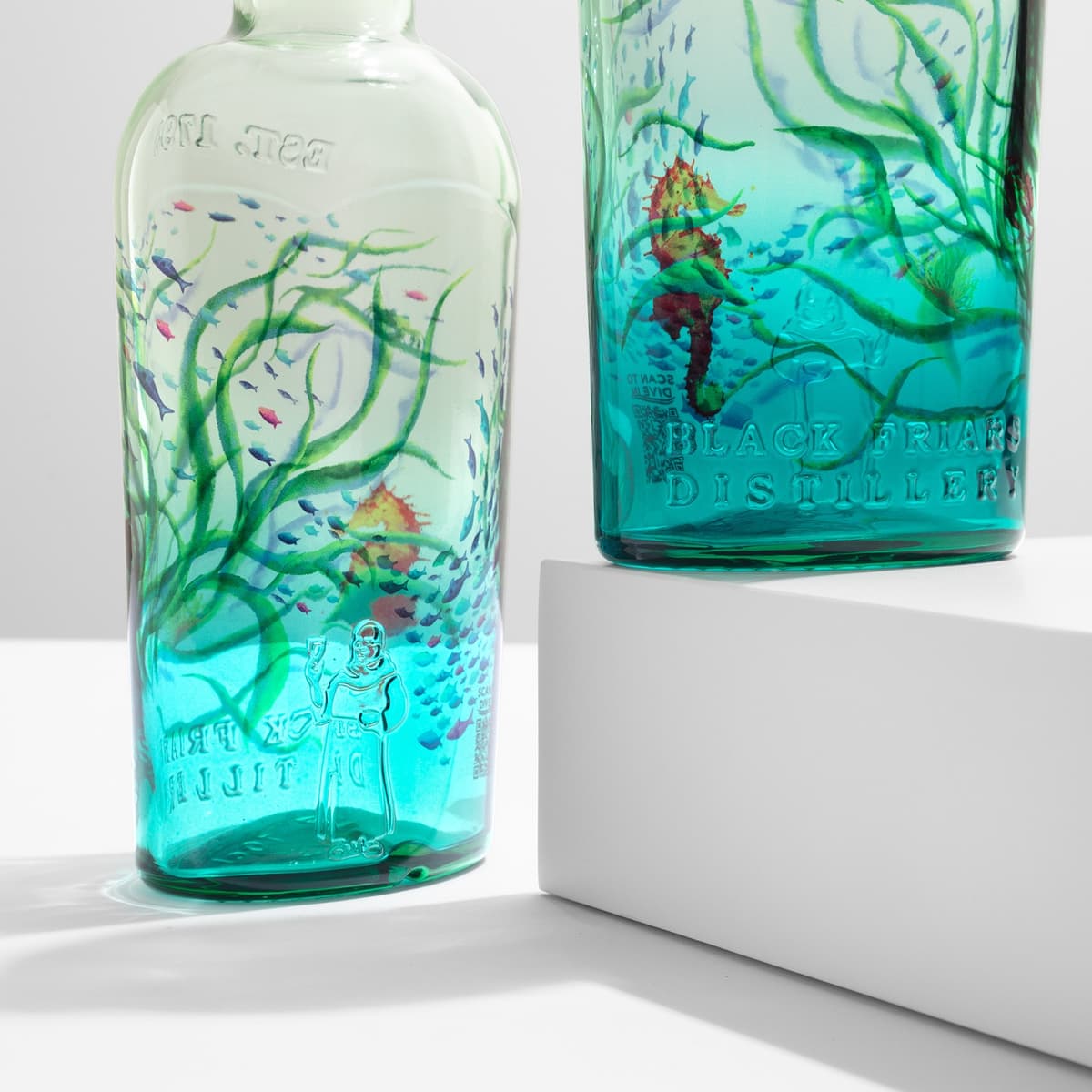
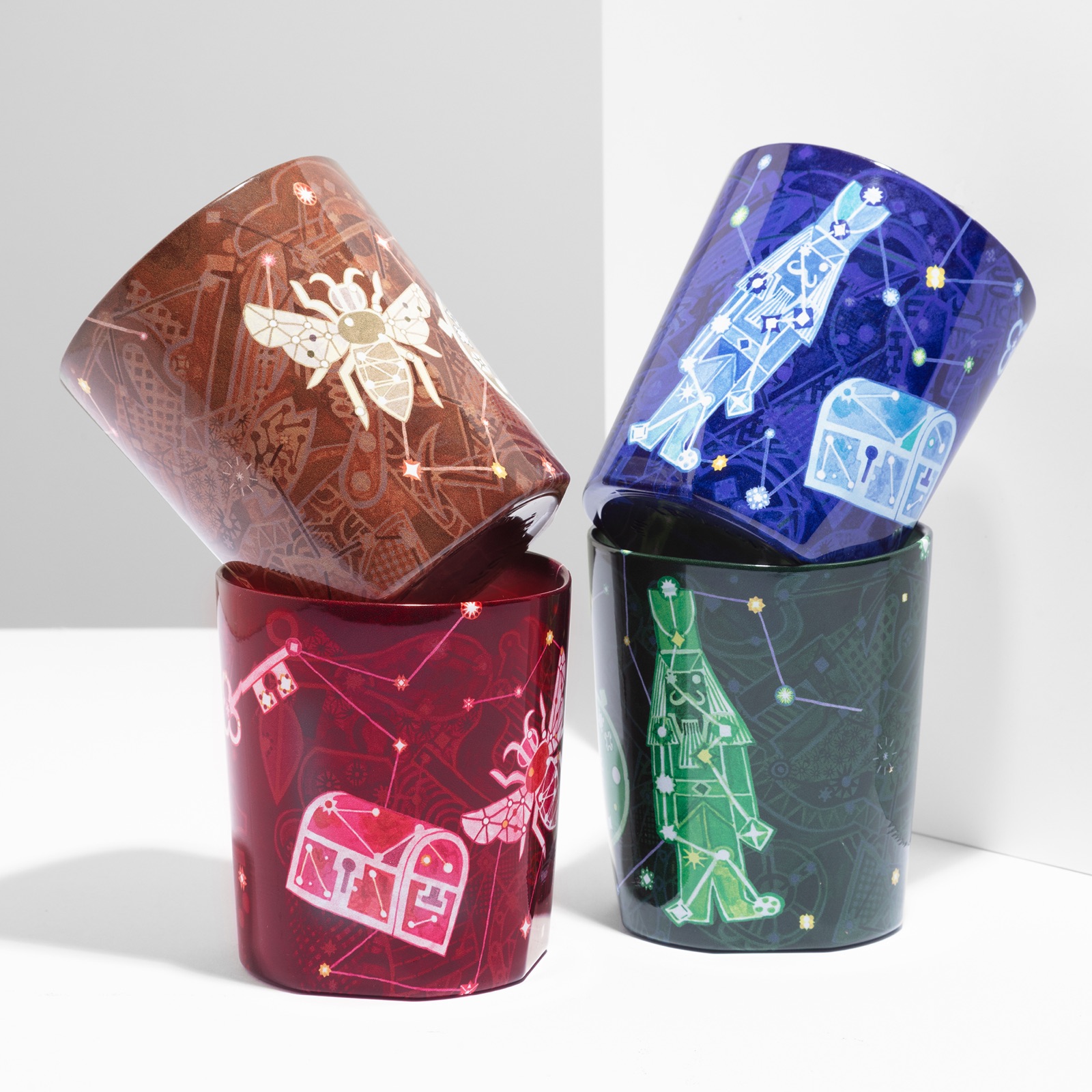
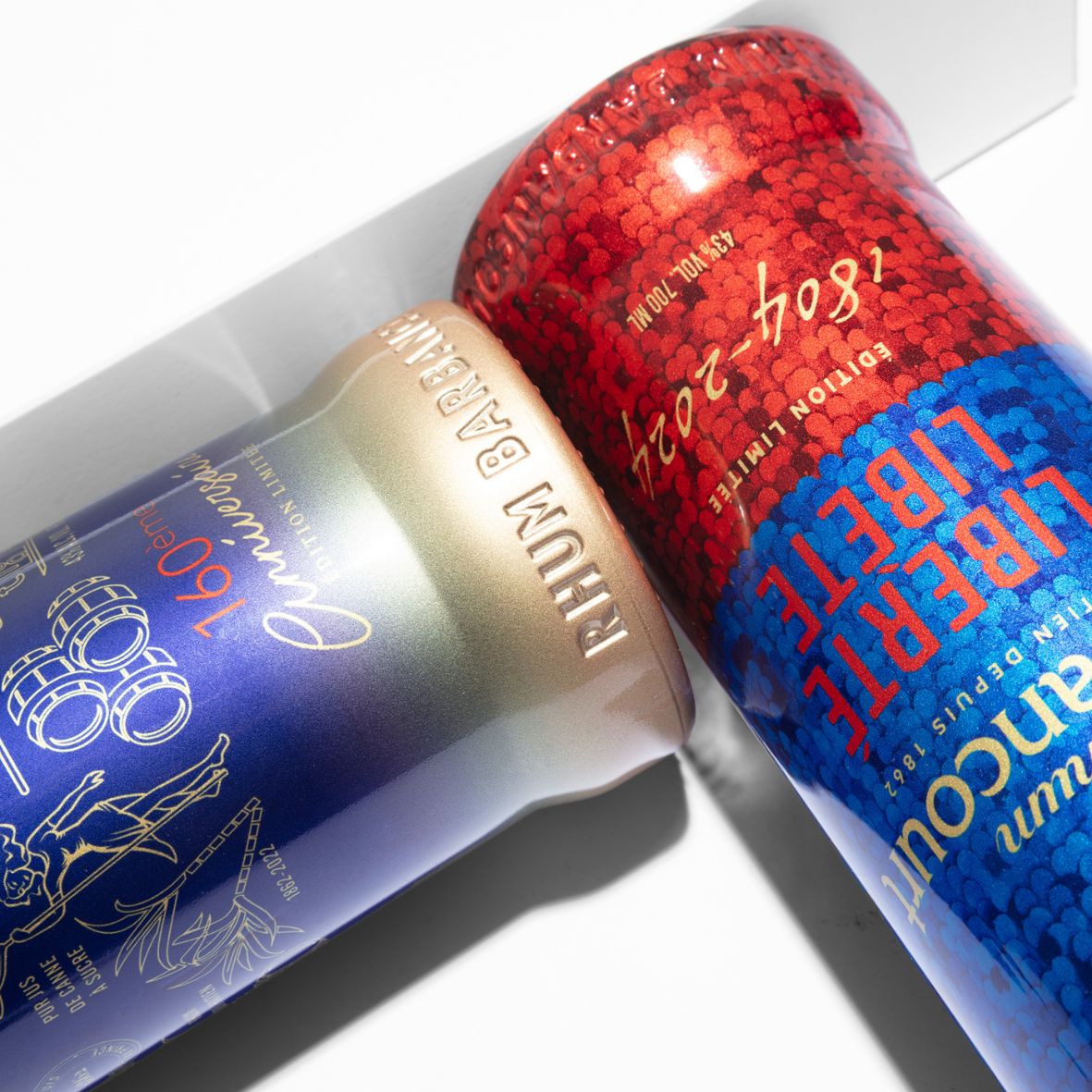
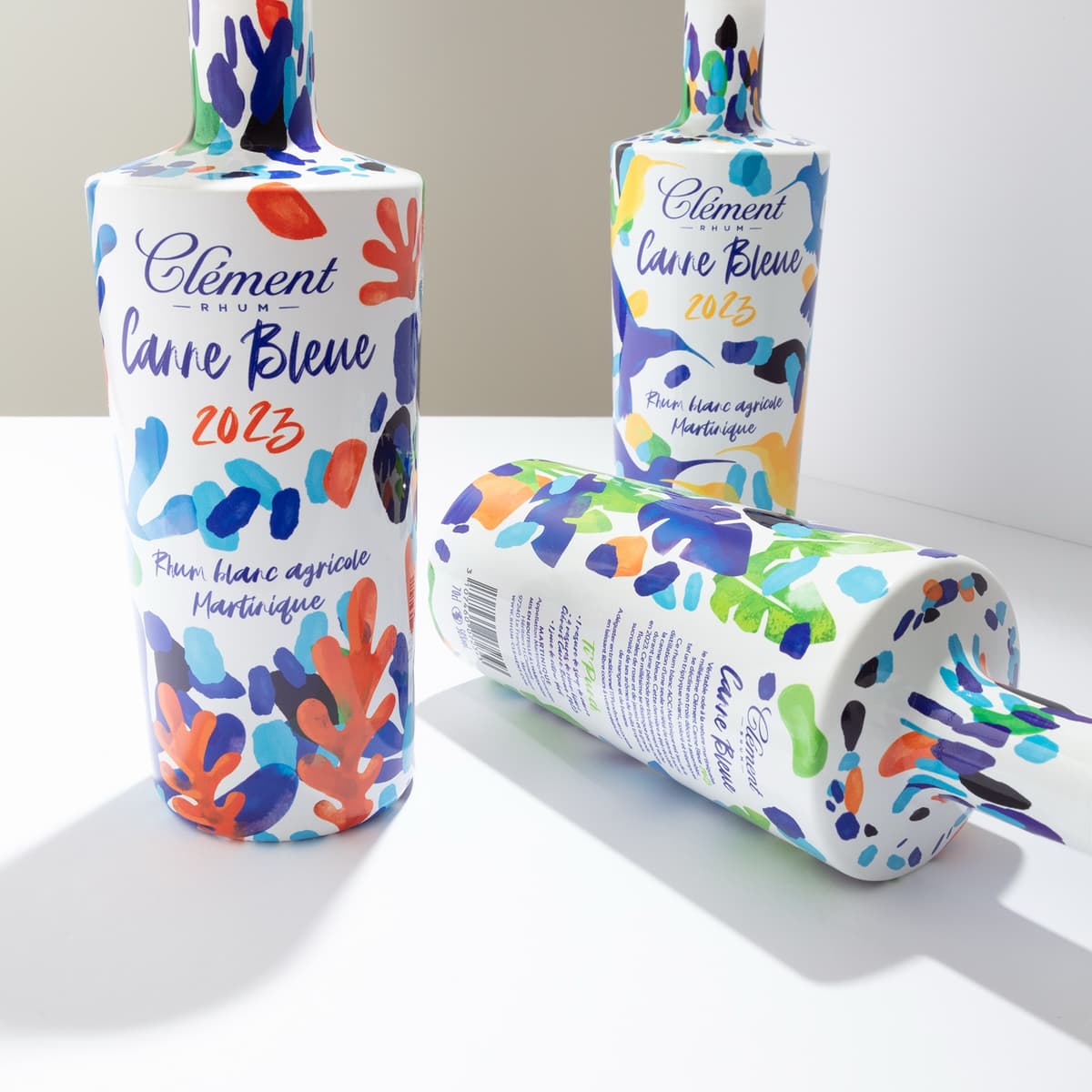
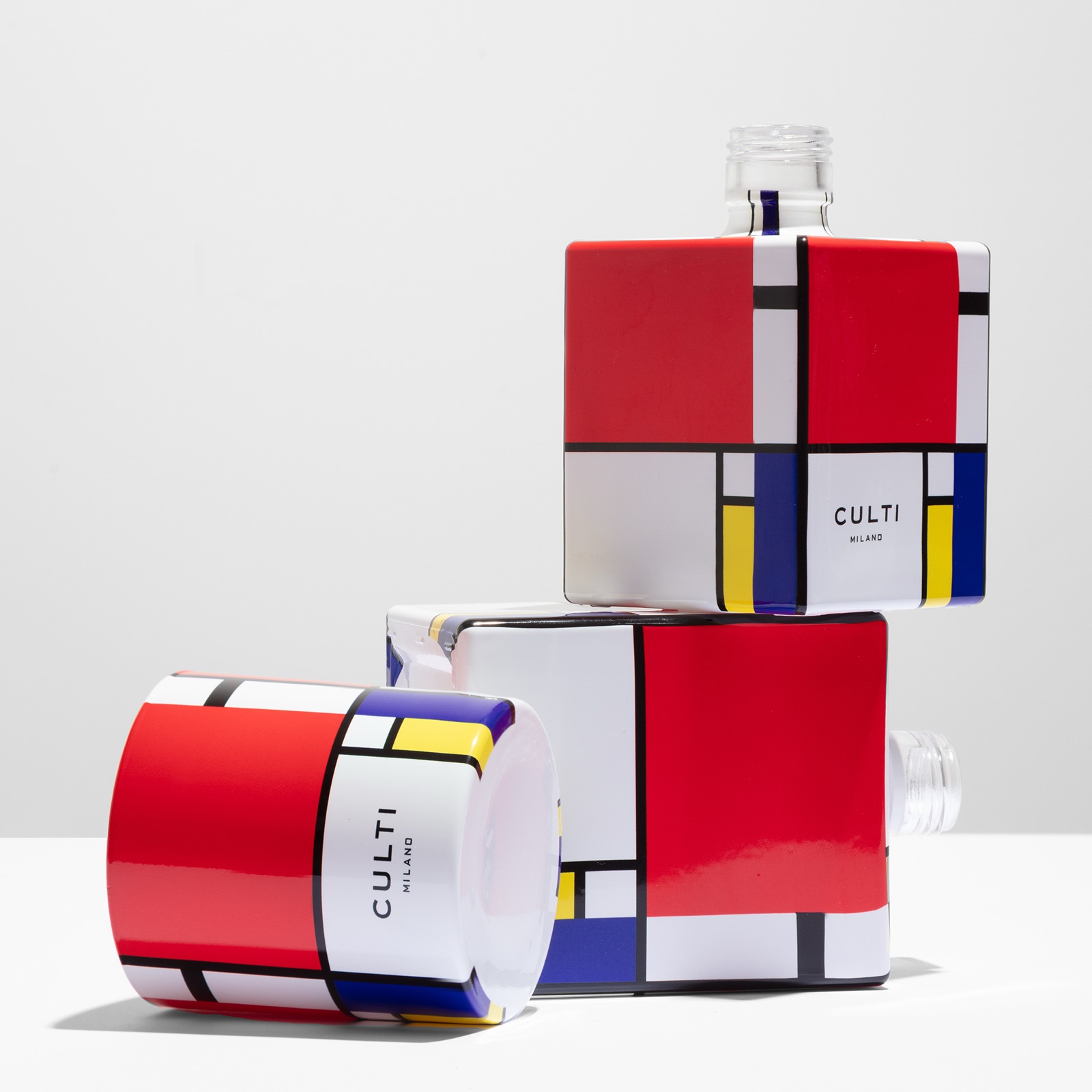
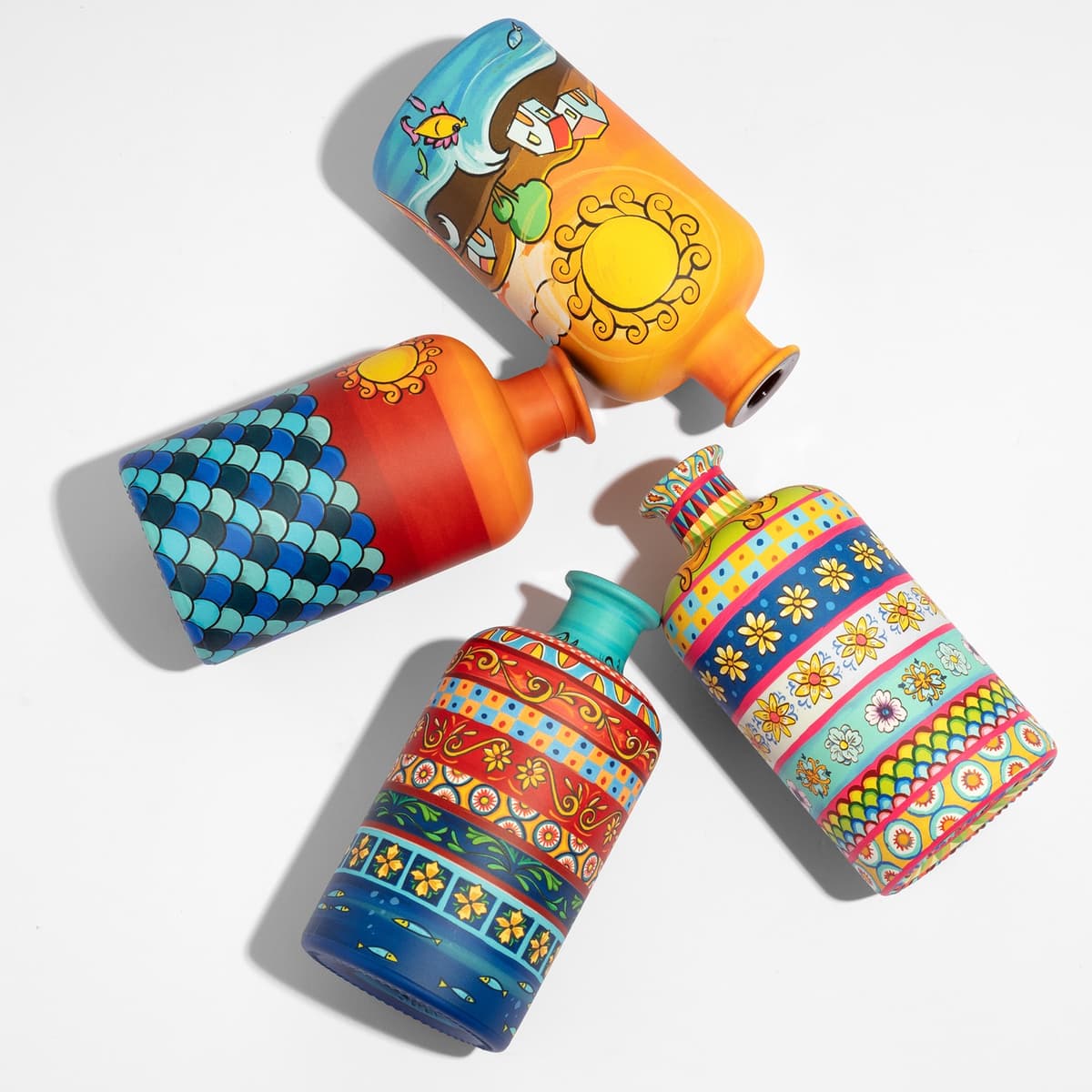
The heart of the plant is the row of sublimation cells, where digitally printed CMYK artwork is transferred onto the primed glass under controlled heat and pressure — at low temperature, well within what glass tolerates without stress. Inside each cell, the inks turn to gas and fuse permanently into the primer beneath: no adhesives, no separate material layers — a decoration with longer-lasting resistance than an applied label. The result is seamless full 360-degree decoration from base to neck at up to 1,200 dpi, produced at up to 4,000 bottles per hour — the approach we unpack in our guide to full-body sublimation, and one that supports up to three SKUs on the same primer base in a single run. Centonze Ice Blue shows what this stage delivers in practice: an intricate Sicilian majolica pattern carried across the full form of the bottle in a single pass, with no seams and no colour breaks.
Inspection and Packing
At the end of the line, every bottle is inspected against the approved production-line sample — the same object signed off during refinement — for colour accuracy, registration, adhesion and surface integrity, with acceptance criteria governed by ISO 9001 processes. Bottles that do not meet specification are rejected before packing, so what goes onto the pallet is only what matched the reference. Approved bottles are packed and ship directly to your filling line or distribution centre from Verona, where each of the two plants sustains a capacity of 30 million pieces per year. It is a deliberately quiet end to the sequence: by the time a bottle reaches inspection, every variable that could surprise you was resolved weeks earlier, at the sample stage.
Typical Timeline
Timelines are indicative and depend on glass availability, artwork complexity and production scheduling.
This process applies equally to perfume bottles and flacons, spirits bottles, wine bottles, candle jars and caps in glass, aluminium, zamac or ceramic.
Learn more about our sublimation technology or get in touch.