Full body sublimation bottle decoration: a supplier's view
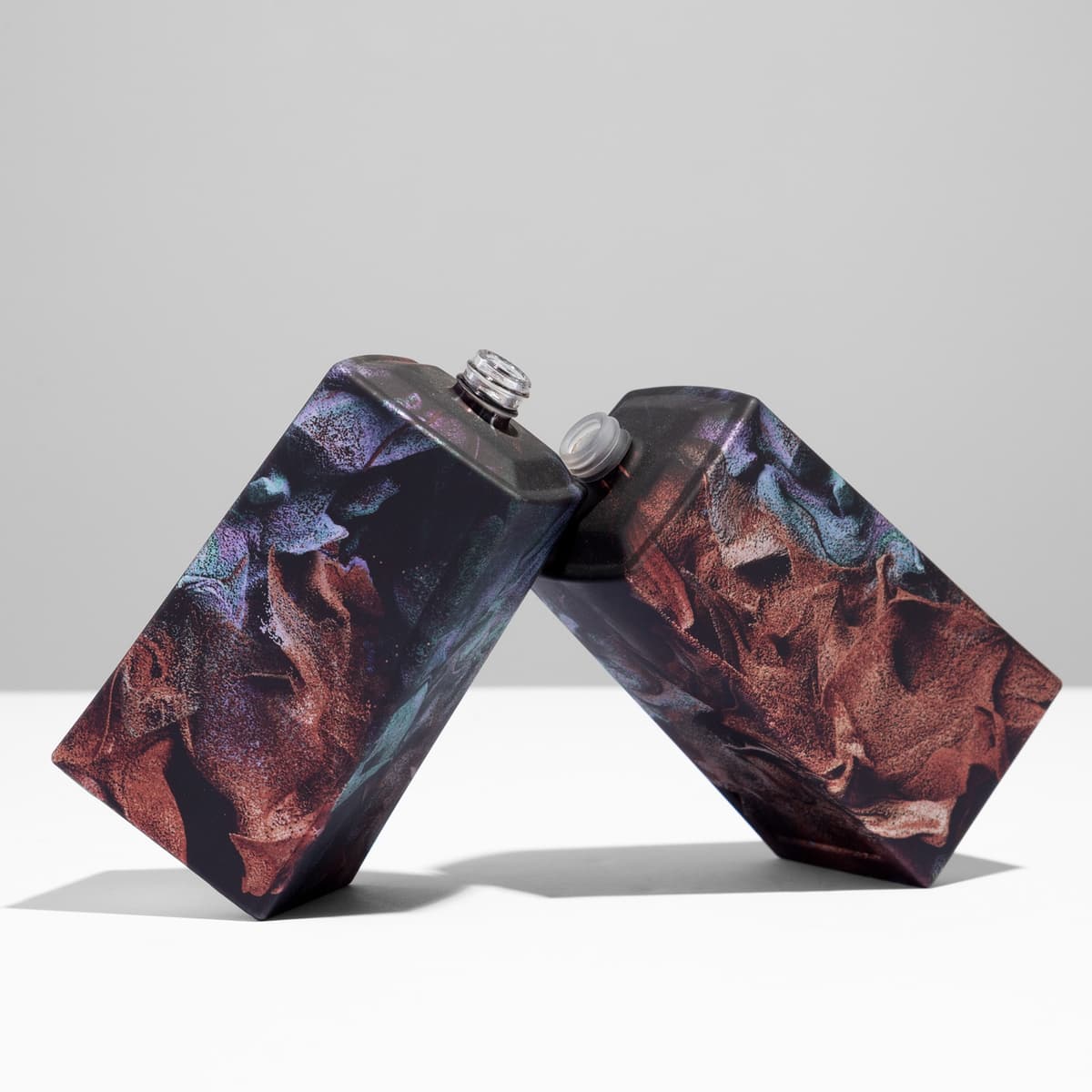
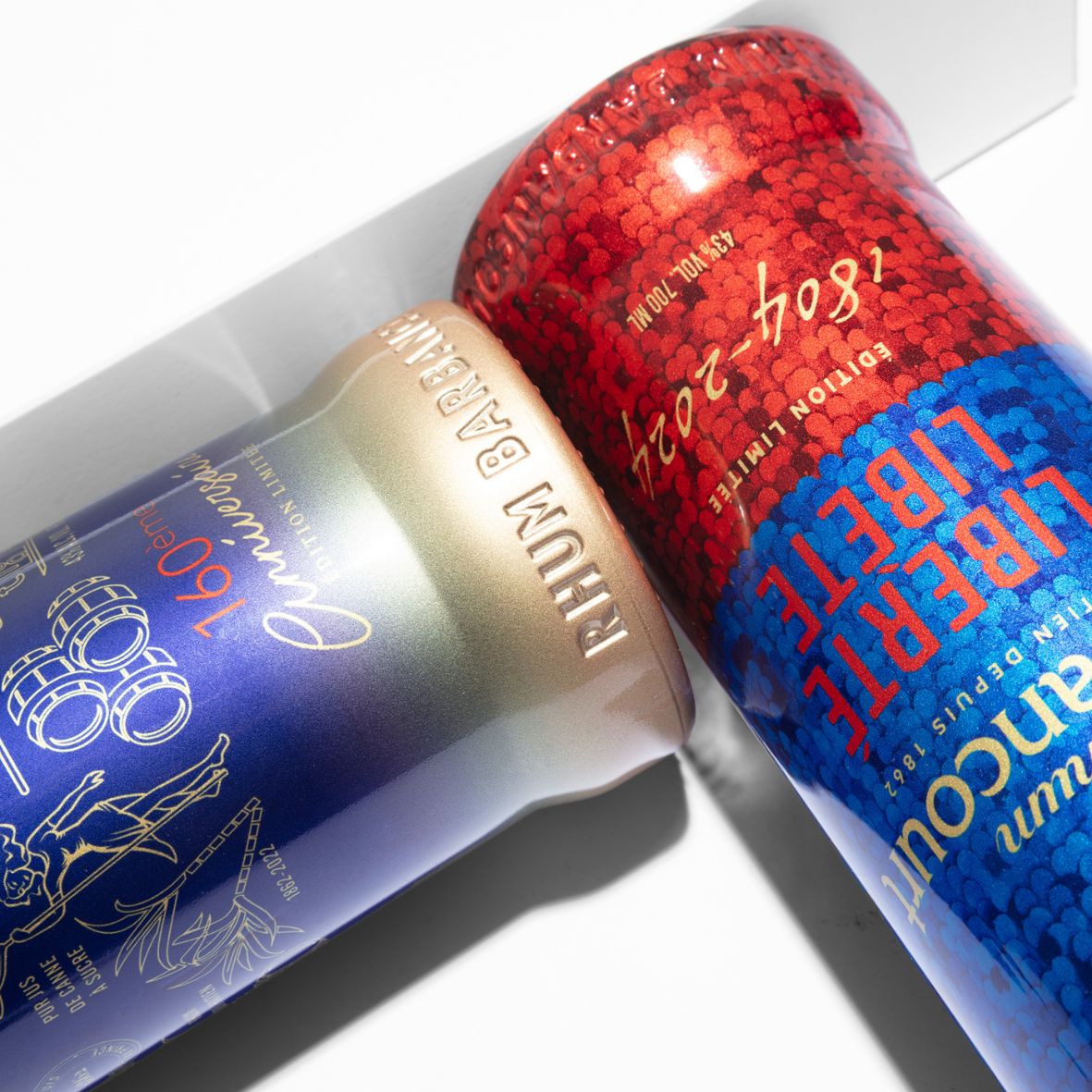
Full body sublimation bottle decoration, in the context of premium packaging, refers to 360° artwork applied to a glass, zamac or ceramic bottle in a single transfer operation — front, back, shoulders, base, recessed details. This is a practical view of what that process involves in production, written from the perspective of a supplier that runs it daily: what it makes possible for the design team, what it requires on the line, and what to verify before sampling.
What "full body" means on a bottle
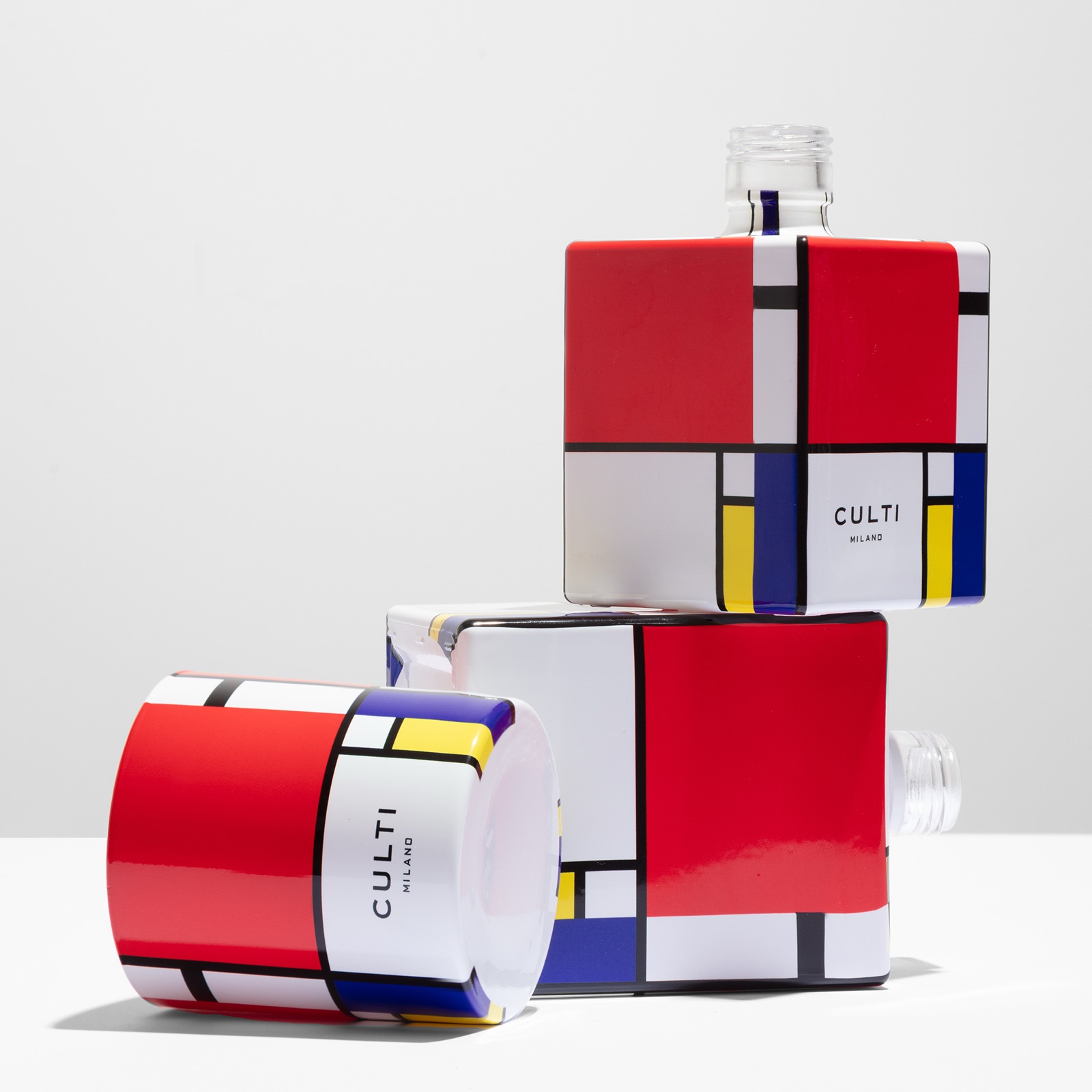
On a perfume flacon, a spirits bottle or a candle jar, full body decoration means the artwork wraps the entire bottle. There is no front panel, no back label, no neutral zone. The whole surface carries the design.
The geometry that defines luxury packaging — irregular shoulders, recessed engravings, asymmetric profiles — sets the brief for the process. The transfer follows the form.
The more useful way to think about it: the bottle stops being a container that receives a decoration and becomes the surface the design is built on. When 100% of the glass is available, the decoration is no longer illustrating the brand story from a panel — the bottle itself carries it. That is a different design brief from "artwork plus label", and it changes what the design team can ask for.
Why full body coverage is in demand now
The pull for full body decoration is coming from the consumer side. Audiences raised on gaming, CGI and social feeds are used to a level of visual richness that a printed label was never designed to match. Brands increasingly want the shelf object to carry the same visual intensity as their digital content — gradients, photographic imagery, dense illustration, generative artwork — rather than a simplified translation of it. The Bvlgari collaboration with Refik Anadol is a literal example: digital artwork, born on screen, reproduced on glass.
There is also a structural reason the bottle is worth this investment. Every other brand touchpoint is skippable — the ad ends, the post scrolls away. The bottle is the one medium the consumer cannot skip: it sits on the table, behind the bar, on the shelf at home, and keeps communicating long after the campaign has ended. Full body coverage treats that surface as the medium it actually is.
What full body coverage unlocks for the design team
Most decoration technologies impose their limits early in the design process. Colour counts get reduced, gradients get flattened, artwork gets split across separate production steps — screen print for the graphic, hot stamp for the accent, a label for the detail. Designers learn to pre-simplify before the file ever reaches the decorator.
Full body sublimation removes most of those compromises. Because the artwork is a single digital file, there is no colour count to economise, no separation between "printable" and "too complex". Continuous 360° graphics, photographic imagery, fine text, textures, QR codes and layered illustration all carry the same production cost as a flat tint. The design question shifts from what can the process reproduce? to what should this bottle say?
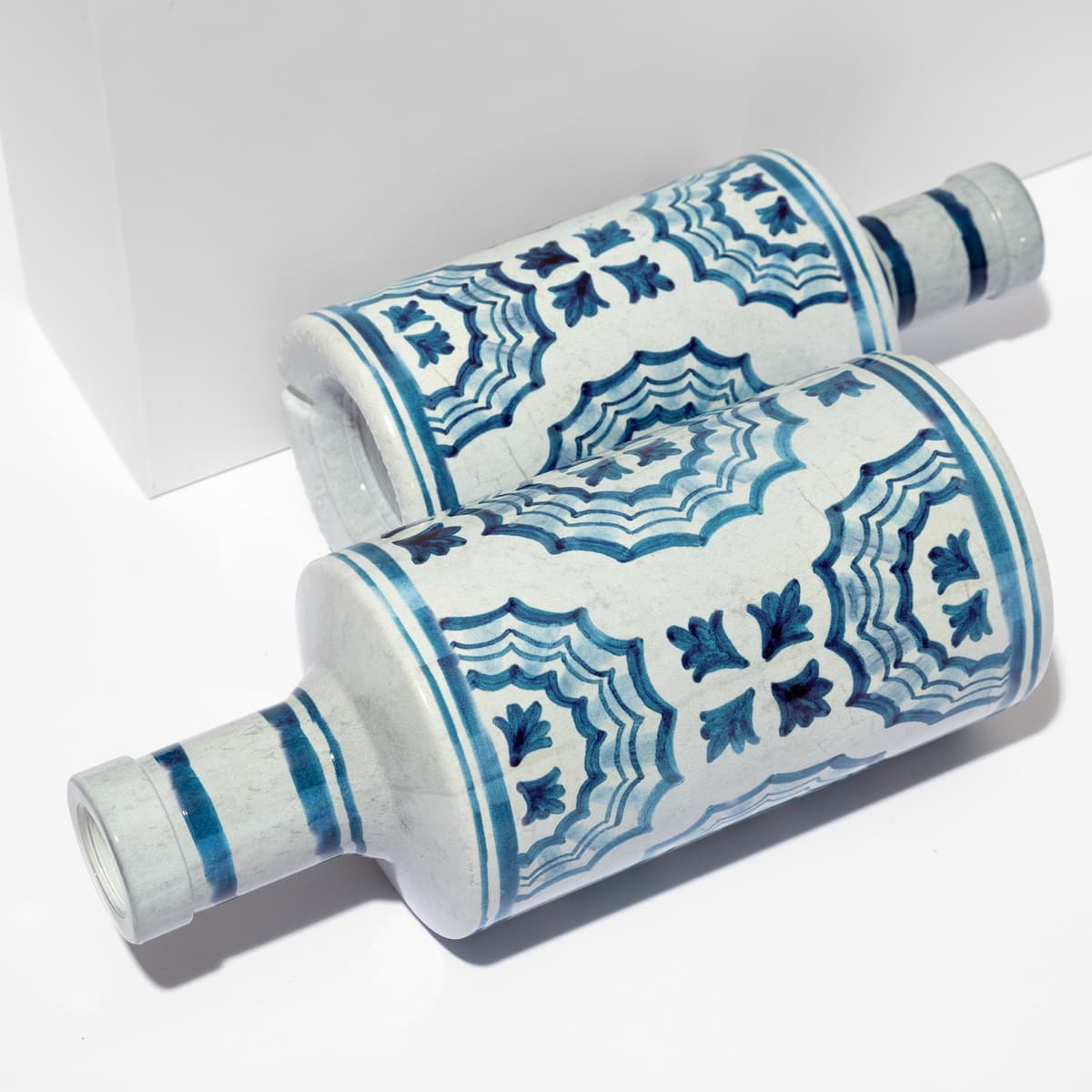
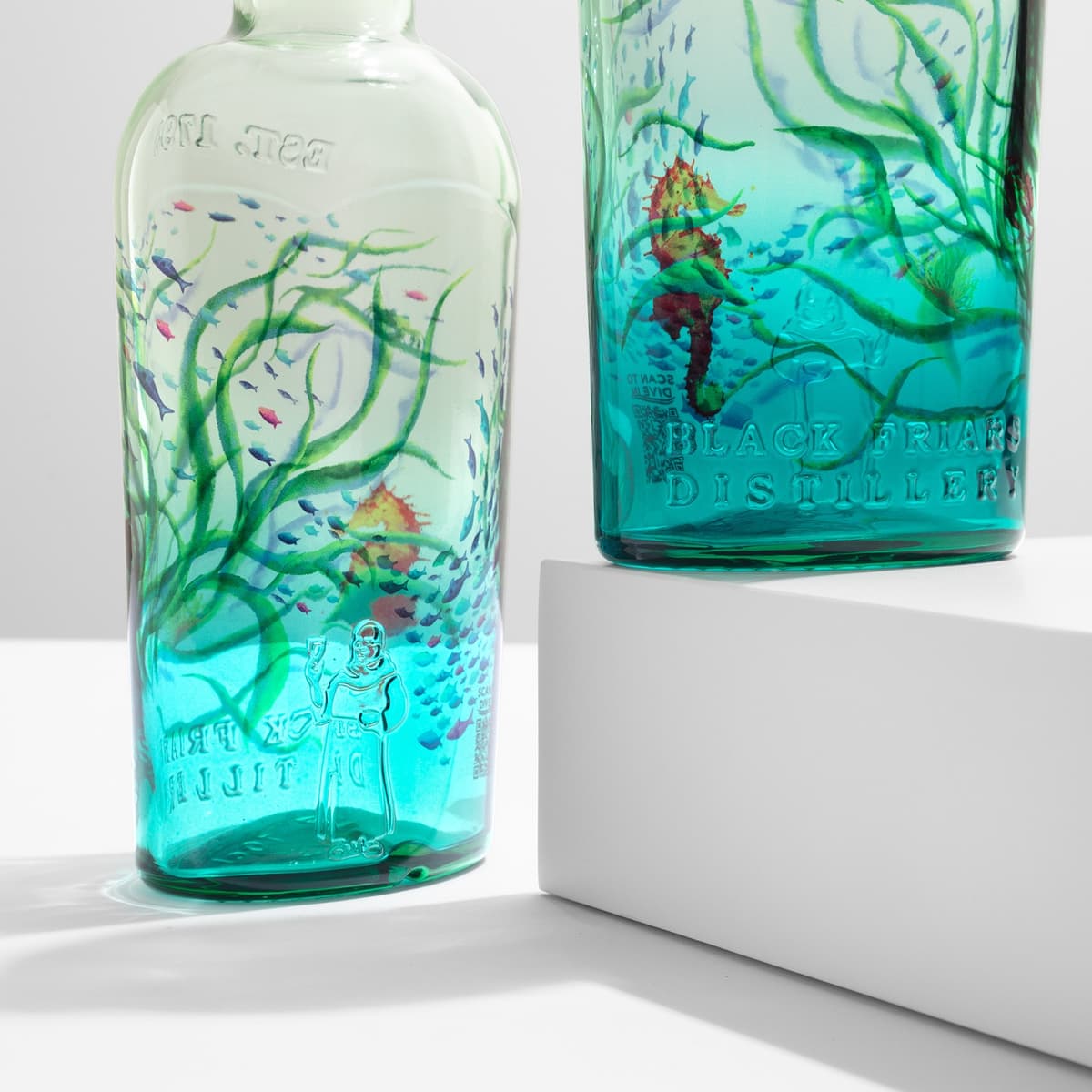
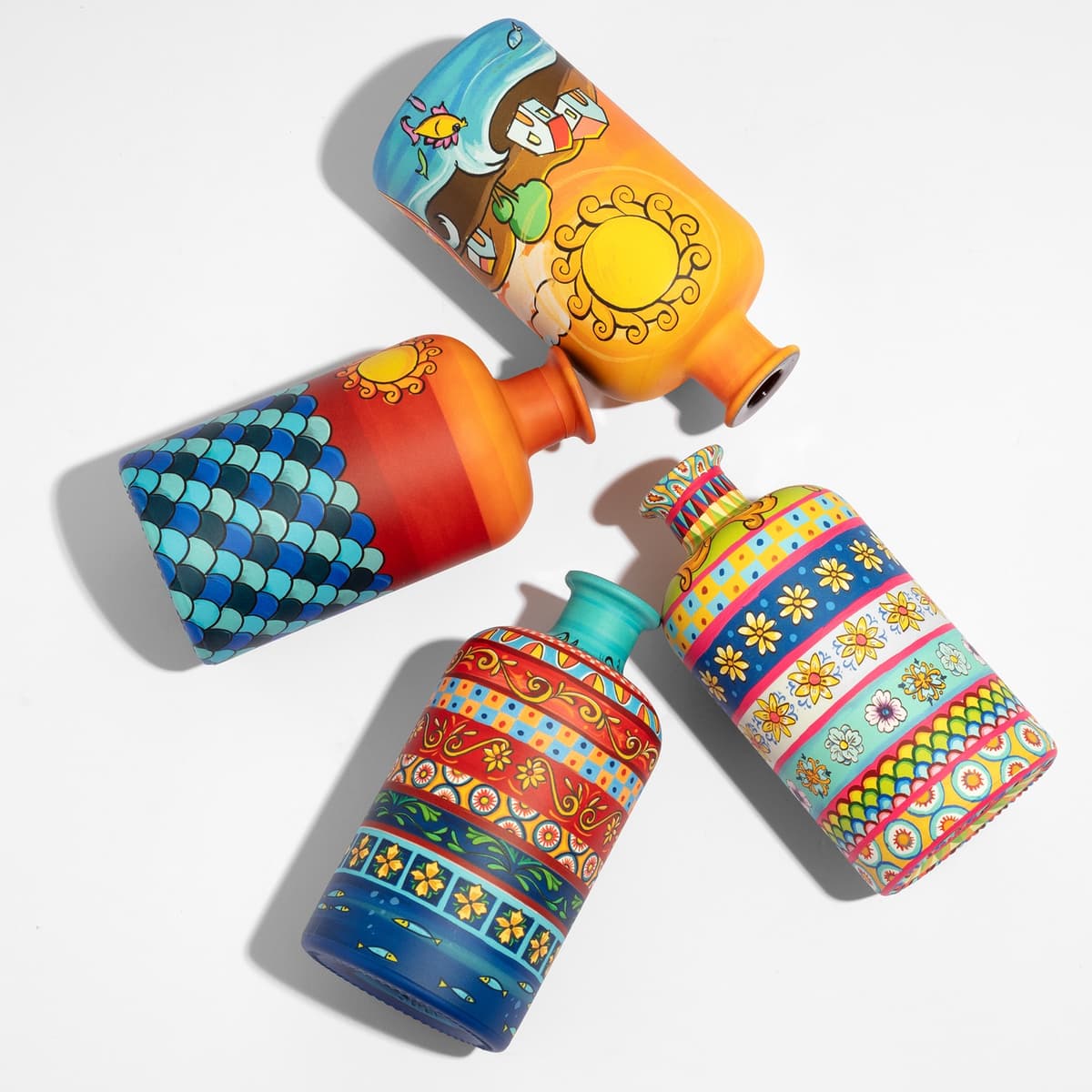
In practice this is how a bottle becomes an object rather than a labelled container — a spirits bottle rendered as hand-painted ceramic, a gin bottle that carries an ocean-conservation artwork across its whole surface, an annual edition redesigned base-to-neck every year.
How the process handles 360° coverage
Sublimation generates the artwork as a single 360° file and transfers it in one operation, conforming to the bottle's geometry. The decoration is continuous: there are no seams, no registration steps to align between passes, no zones to stitch together.
The one point where a 360° wrap has to close on itself — the artwork junction — is the technical detail that separates a premium result from an obviously "wrapped" bottle. On a well-engineered line the junction is close to invisible, which is what allows genuinely continuous artwork (a gradient running around the full circumference, a pattern with no natural break) instead of designs that have to hide the seam behind a dark stripe.
This is what allows full body coverage to behave consistently across complex forms, rather than being assembled from multiple decoration passes.
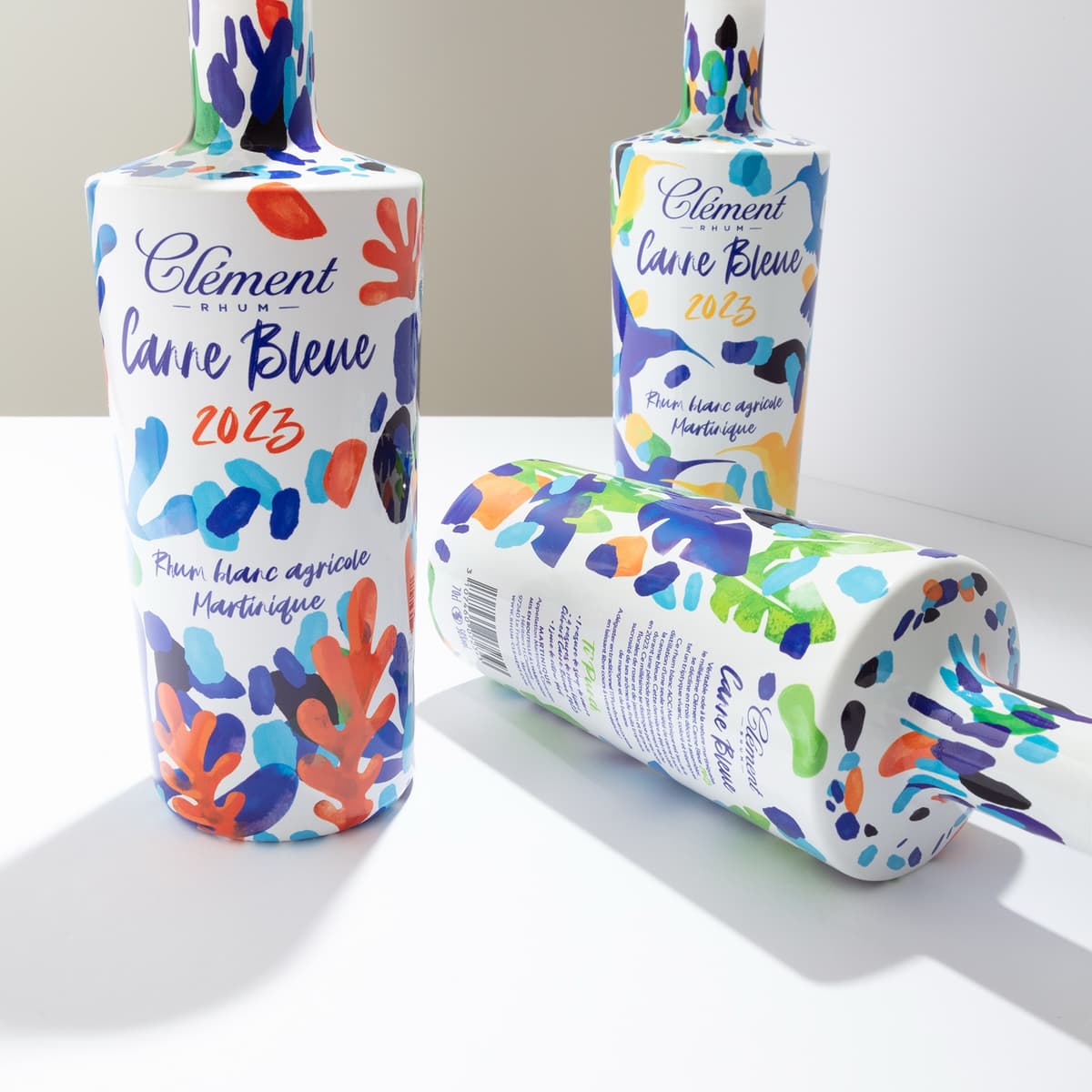
A real production example: the Rhum Clément Canne Bleue annual edition runs full-body artwork around the entire bottle every year — a 360° design, base to neck, produced as a single continuous operation at commercial volume.
From niche technique to industrial process
A fair question from anyone evaluating full body sublimation: didn't this process have a reputation problem? It did. Early sublimation on glass was associated with high reject rates, limited throughput, dull or over-fired colours and costs inflated by long supply chains between the brand and the actual decorator. Some of that reputation still circulates, and it is worth addressing directly.
What changed was not a single breakthrough but the industrialisation of the whole chain. In ATIU's case that meant vertically integrating the steps that used to fail independently — primer formulation, consumables, colour management, printing and application — and engineering production lines specifically for glass decoration rather than adapting equipment from other industries. The practical results: colour vibrancy that holds through firing, waste reduced at the source, complex bottle geometries decorated consistently at speed, and a near-invisible artwork junction. Each ATIU plant in Verona runs at a capacity of around 30 million pieces per year.
The commercial model changed too. Working directly with brands — rather than through layers of intermediaries — shortens sampling loops and keeps the technical conversation between the design team and the people who actually run the line. The lingering misconception is that sublimation is still a niche or artisanal technique; in production terms it now sits alongside the established decoration technologies used on premium bottles, with a different set of trade-offs. For a direct comparison, see sublimation vs screen printing on glass.
What full body coverage requires in production
Three elements need to be in place for full body sublimation on premium bottles:
1. A primer system matched to the substrate
Sublimation inks bond to a primer layer rather than directly to the glass. Each substrate — flint glass, opal glass, zamac, ceramic — calls for a primer chemistry tuned to it. A primer library covering the relevant substrates is what allows the same decoration approach to work across a real product range.
2. Compatibility with the bottle geometry
Full body coverage on irregular forms requires a setup that can hold and transfer onto the bottle's actual shape, including recessed details, asymmetric profiles and non-standard shoulders. Without that, full coverage reverts to a panel-based approach.
3. Sample-to-production continuity
The first physical sample should run on the same line as the production run, with the same primer, the same colour profile and the same registration tolerance. That continuity is what makes the approval sample a useful reference for the production batch.
Coverage and resolution
Full body coverage also implies a resolution that holds across the whole surface. ATIU runs sublimation at 1200 dpi on the entire decorated area. Gradients, fine text, brand patterns and HD artwork reproduce without seams or registration shifts, because the transfer is a single continuous operation.
One bottle, many editions
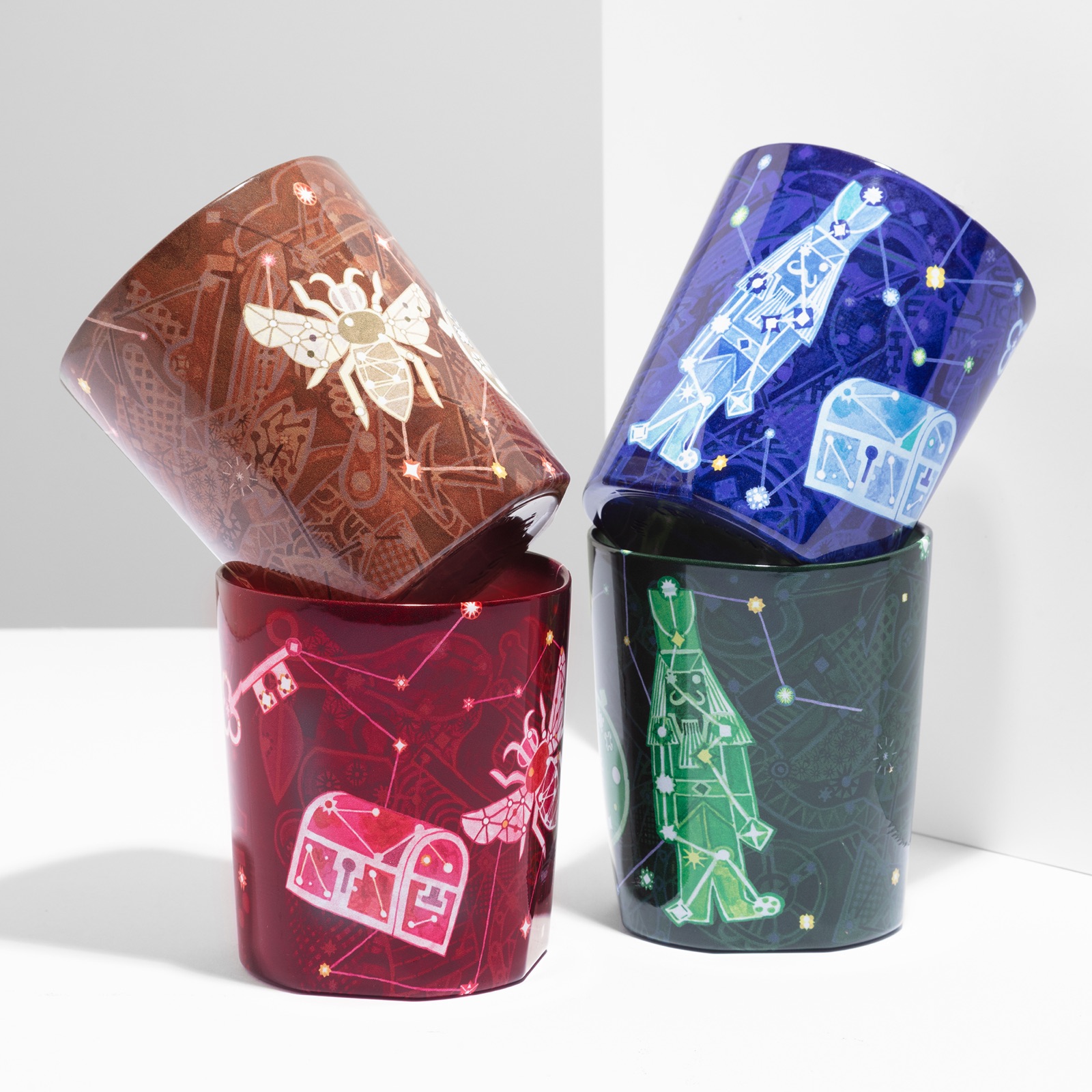
There is a strategic use of full body decoration that goes beyond a single hero design. Because the artwork is a digital file rather than a set of physical screens or tooling, changing the design between batches carries no retooling cost. The same bottle, the same line and the same process can run a core range, a limited edition, a travel-retail exclusive and a market-specific collection — without touching the product, the glass or the filling line.
For brands facing increasingly fragmented audiences across markets and demographics, this turns decoration from a finishing step into a segmentation tool: differentiated editions at industrial volume, with a consistent base product underneath. The Canne Bleue annual edition is the pattern in its simplest form — one bottle, a new full-body artwork every year. It can even go a step further: because a rendering faithfully previews the finished bottle, editions can be tested with the market before production begins.
What to ask before sampling
A short, practical checklist when evaluating a full body sublimation bottle decoration supplier:
- Which substrates do you decorate full body — glass, zamac, ceramic, aluminium?
- Does the sample run on the same line as the production batch?
- What resolution do you hold across the entire surface?
- How is the artwork junction handled on continuous 360° designs?
- What does a design change between batches cost — is there retooling?
- How is colour fidelity verified between sample and production?
- Are primers formulated and applied in-house?
- What is the minimum order quantity and the lead time to first physical sample?
Where ATIU fits
ATIU operates two production plants in Verona, Italy, dedicated to sublimation on glass, zamac, aluminium and ceramic. The same line that produces the first physical sample produces the production run. Minimum order from 5,000 units. First sample in 5 working days from component arrival. ISO 9001 certified, EcoVadis Committed, carbon footprint measured on Scope 1, 2 and 3 since 2023 (Up2You).
For a project view of full body sublimation in perfumery, see our perfume flacon decoration page. For the technology background, see why choose sublimation for glass decoration.
Discuss your project — get in touch or see how we work with perfumery brands.